
🚀 How testing can become even faster and more stress‑free – Accelerating debugging with ML
The evosoft TestFactory SINAMICS team has developed an innovative, machine‑learning‑based tool that efficiently analyzes failures occurring during test runs.
LogAnalyzer identifies the root cause of test execution errors in just seconds, even in the early, unstable phases of testing.
What can LogAnalyzer do?
Analyzes test logs using ML models
Provides probability‑based suggestions for the likely cause
Speeds up error detection and feedback loops
Reduces the load on testers and automation engineers
Thanks to LogAnalyzer, test engineers spend far less time on manual log analysis, uncover failures much faster, and can dedicate more energy to real automation tasks – a crucial advantage for projects with tight deadlines.
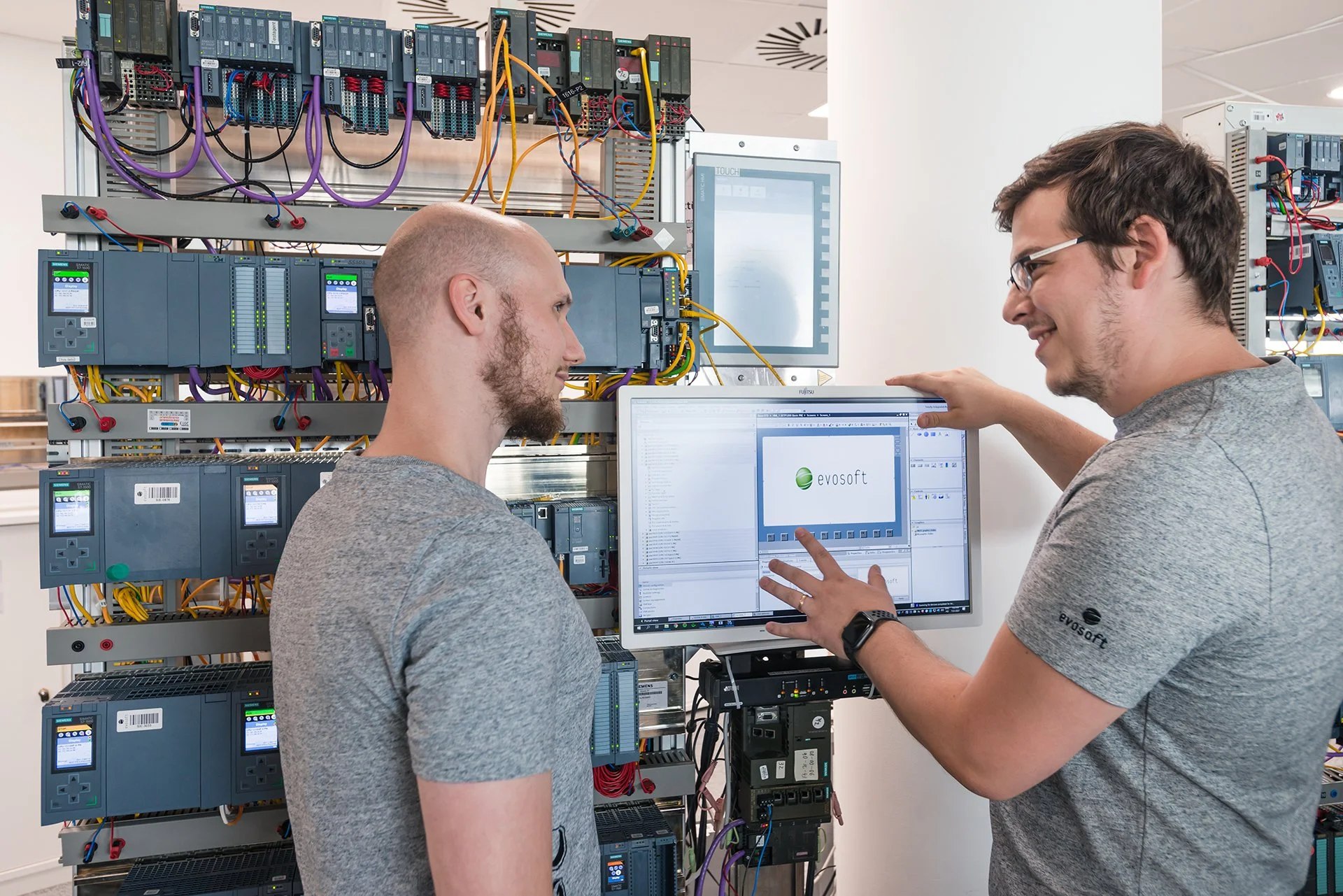
This innovative solution has already proven itself across multiple international teams in Germany, India, and China, and is actively used across several product lines, with additional teams preparing to adopt it.
It is important for us that the tool can be reused and applied across as many platforms as possible. With this, we aim help building the ONE Tech Company together.
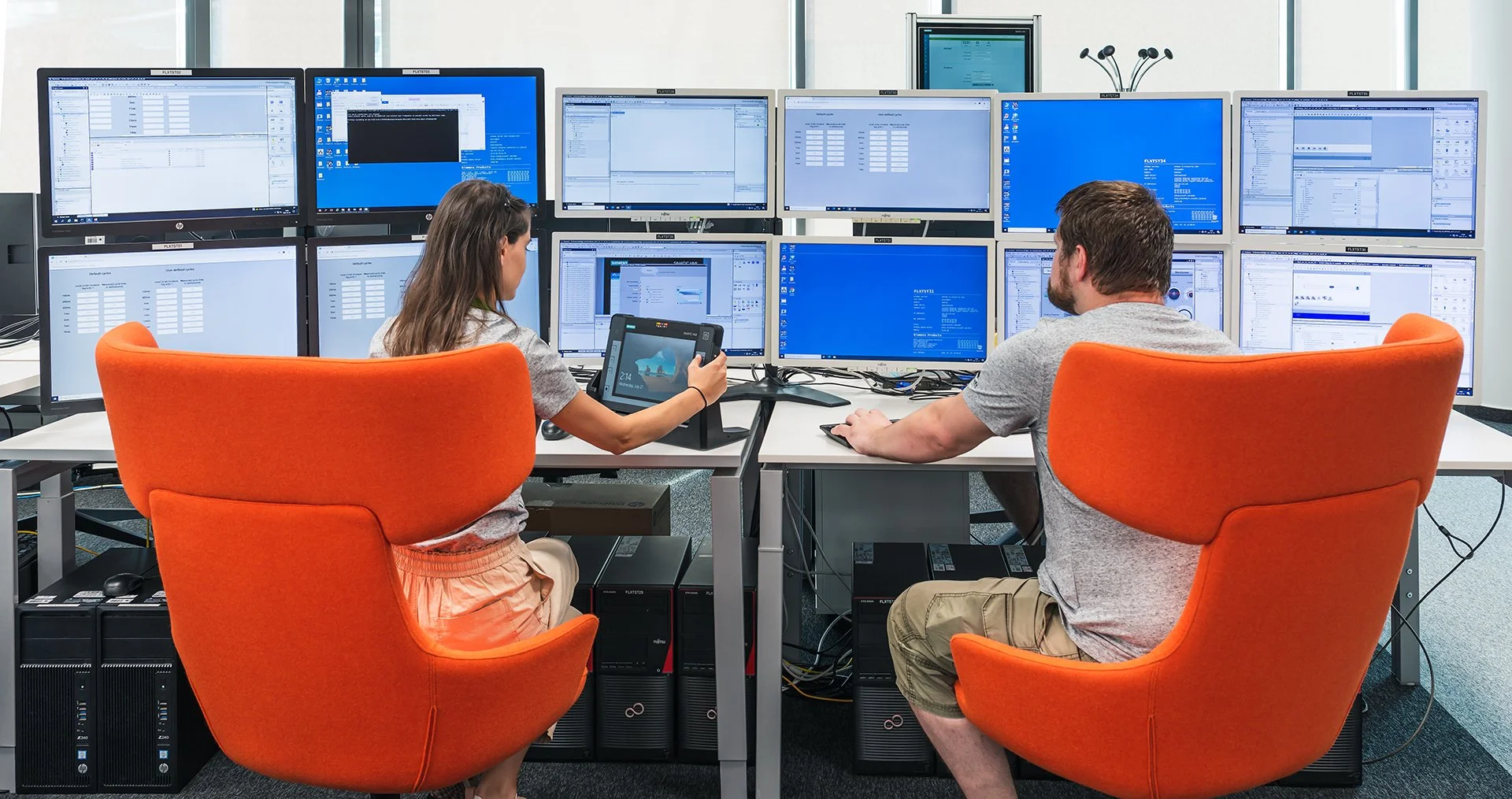
Behind the scenes: how LogAnalyzer learns
A learning‑based system requires a large number of pre‑categorized log files for project‑specific training. In new projects these logs often don’t yet exist, and in older projects they tend to be inconsistently categorized.
Therefore, the first step is always for the user team to establish a training dataset and define the categories to be trained – often thousands of manually analyzed logs.
The core of the solution is a proprietary preprocessing pipeline that performs context‑dependent tokenization of textual log files. The tokenized logs are then used for training with the scikit‑learn library.
Training thousands and sometimes tens of thousands of logs may take up to a week. The output is a multi‑model categorization engine combining neural networks, decision trees, SVMs, and nearest‑neighbor algorithms.
Classification is exposed via API endpoints, enabling external systems to send analysis requests and receive results as probability vectors.
Thanks to context‑aware tokenization, both the training process and the log analysis become reusable across similar log types, making LogAnalyzer not just a debugging tool, but an enabler of stronger engineering focus.
💡 Looking ahead, future vision
The next step is a containerized, cloud‑ready, self‑service version that any Siemens project can easily adopt with minimal developer support.
